
The art of writing it down

I’m a big journaler. I can’t remember exactly when I started this practice, but it feels like it has been at least 10–11 years now of journaling. Yes, that includes some breaks in between, but this might be one of my longest hobbies I have ever stuck with.
If you couldn’t tell by my previous writing, I love to overthink. I call myself a high-functioning person with anxiety/OCD and some ADHD sprinkled in. Basically, I have a lot of thoughts swirling around at any given moment. Because of this, I need an outlet that helps me clear my head; otherwise, I just start to spiral and end up living in not a great place.
So journaling has been that outlet for me. Over the years, I have tried many different journaling styles and techniques (some of which I have kept, some I left), but the practice of journaling and writing things down has always stuck.
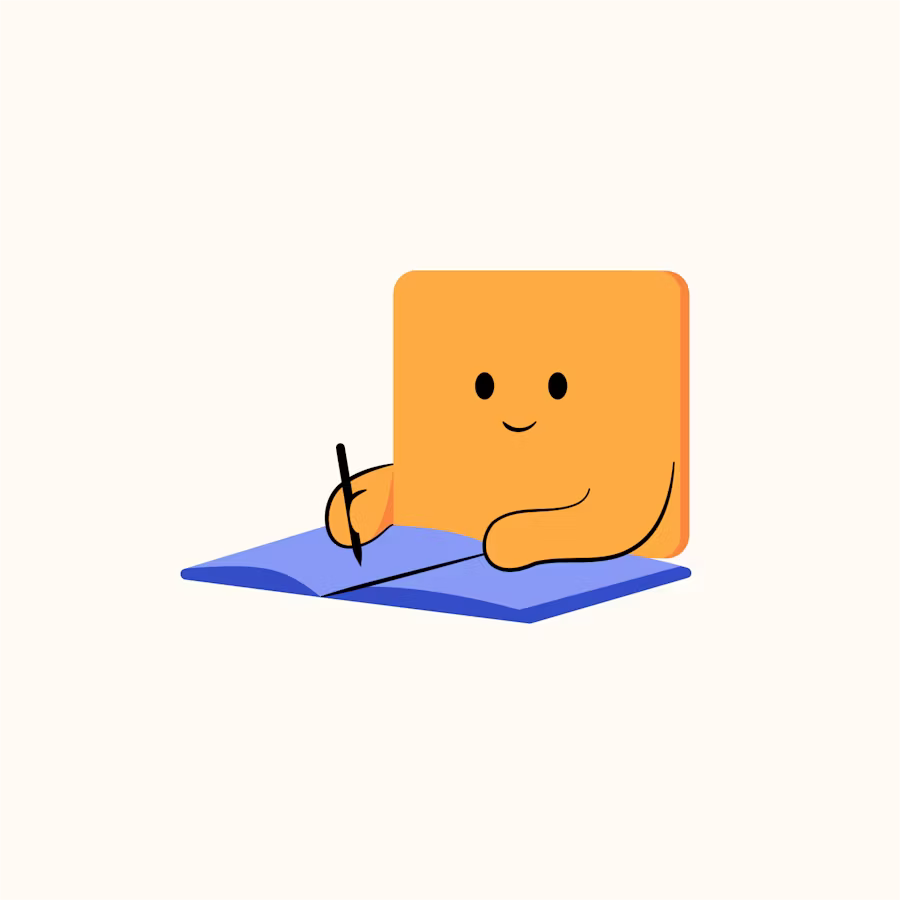
If I were to describe journaling, I would say that it is meditative. It helps me relax, helps me clear my head, and allows me to have some bits of calm in my day. Not every single journal feels like it is super groundbreaking or I have this “aha” moment, but I do feel lighter, and that’s the point of it all.
Sometimes journaling is as simple as a brain dump. I just write down every random thing that’s in my head: things I need to do, things I’m worried about, things that made me smile that week. It’s not about structure or neatness. Half the time, my handwriting is barely readable, and I end up scribbling arrows to connect half-formed thoughts. But somehow, in the middle of that mess, my brain feels quieter.
Other times, I use journaling to get myself unstuck. Like when I’m overthinking a decision or unsure what I want next, I’ll start asking myself questions on paper. “What am I actually afraid of?” “What would I do if I wasn’t scared?” “What’s really bothering me right now?” Usually, the first few lines are just me complaining, but somewhere around line ten, I start getting closer to the truth. That’s the magic of writing it down. It gives you a mirror you didn’t know you needed.
I think sometimes people overcomplicate journaling. They picture it as this perfectly curated notebook full of neat handwriting and deep reflections. But for me, it’s never been about aesthetics. It’s just a space where I don’t have to perform. I can be as messy or repetitive or honest as I need to be. There’s something healing about not needing to make sense to anyone else.
And honestly, I think we all need some version of that. A way to process the noise before it becomes too loud. We live in a world that’s constantly shouting at us — what to care about, what to want, who to be. Writing things down is my way of turning the volume down. It’s a small act of rebellion against the chaos. Just me, a notebook, and a pen, trying to make sense of my own brain.
There are times when I’ll go back and read old entries. It’s weirdly comforting to see what I used to worry about and realize how much of it worked out anyway. I can literally track my own growth through those pages. You start noticing patterns — the same themes, the same lessons showing up in different forms. It’s like seeing your old self in the rearview mirror, waving at you, saying “you made it through this once, you can do it again.”
There are also entries I can’t read again. Some are too raw. Some were written in moments I’d rather not relive. But even those pages serve a purpose. They remind me that I kept going. That I had the courage to face what was hard instead of pretending it wasn’t there. There’s something powerful about documenting your own resilience, even when you didn’t realize that’s what you were doing at the time.
Sometimes I think journaling is my version of therapy. I’ve done real therapy too (and I’m a big fan of it), but there’s something about being your own witness that hits differently. You learn how to sit with yourself. You stop running from your thoughts. You start noticing how often your brain tries to trick you into catastrophizing, and you learn to talk yourself down gently instead of believing every story it tells.
It’s also just a really good way to track your life. I’ve written about everything — random grocery lists, new ideas, relationships, fears, moments of gratitude, frustrations, burnout, hope. I can literally flip through years of my life in pen form. It makes everything feel a little more real, like I’ve actually lived it, not just scrolled through it.
If you’ve never tried journaling, I don’t think it needs to be anything deep or fancy. Start small. Write one sentence about your day. Or one thing you’re grateful for. Or one thing that annoyed you. It’s not about how it looks. It’s about getting what’s in your head out of your head. That’s where the real shift happens.
Even if you never read it again, you’ll feel a difference. Because when you write something down, it stops being this formless cloud floating around in your brain. It becomes something you can see. And when you can see it, you can start to understand it.
So yeah, journaling might not solve everything. But for me, it’s been one of the most grounding practices I’ve ever had. It’s a reminder that no matter how chaotic things feel, I always have a way back to myself.
And that, I think, is the real art of writing it down.
Thank you for reading,
Max
If you enjoyed this, please share it with someone special.
Was this forwarded to you? Sign up for my newsletter here to receive this directly in your inbox.
Support the newsletter: If you’d like to support my work, consider becoming a Paid subscriber
Stay connected: For more content and updates, visit my website or follow me on LinkedIn.
Love this! I've gone through waves of being super into journaling over the years... sometimes I like the idea more than the practice. But the Artist's Way really solidified the habit for me and you're 100% right—it can be SUCH an impactful way to process your innermost thoughts. Thanks for sharing!
I journaled like a fiend in college and reading them now really is a time capsule to how much I needed to a) come out of the closet and b) find some new friends. They are hard for me to read sometimes but I’m glad they preserved that time period.